


Unveiling the Mastercraft: The Intricate Art of Jewelry Repair
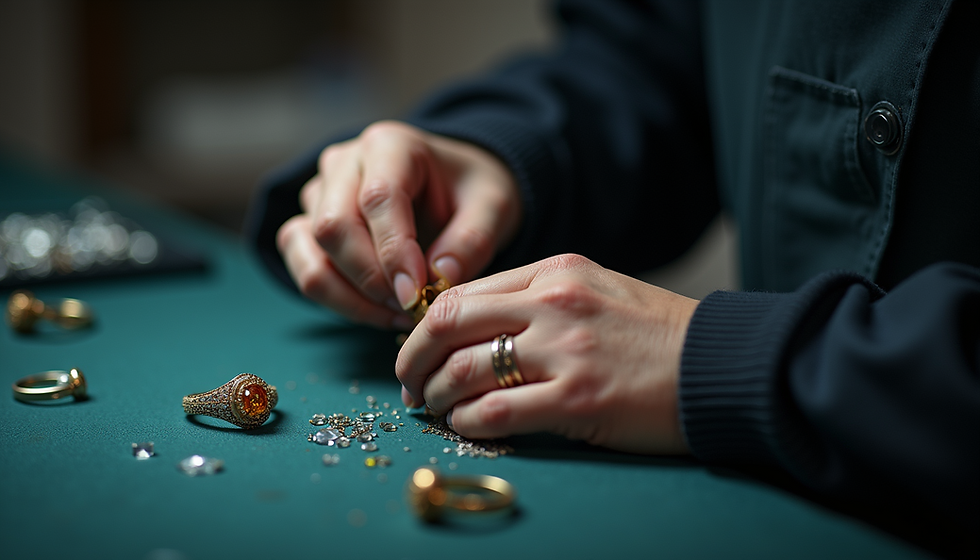
Jewelry repair encompasses various techniques aimed at repairing or restoring a piece's functionality and appearance. Common tasks include:
Resizing rings
Resetting stones
Re-tipping and replacing prongs
Repairing chains
Reconstruction after forcible removal
Skilled jewelers utilize specialized tools designed for different materials, such as gold, silver, or platinum. Each of these materials has distinct properties that require tailored methods to work with effectively. For example, gold is malleable and easy to shape, while platinum is much more dense and more challenging to work with. It requires long experience to become versed in all techniques for working with all precious metals, believe me.
The repair process typically starts with a thorough assessment of the jewelry. A professional jeweler will meticulously examine your entire piece, determine what repairs are necessary, and communicate this to you, ensuring you understand the process and costs involved before making any commitment.

Common Repair Services
Ring Resizing
Our bodies change over time and fingers are no exception. Sooner or later, many find their rings either too tight or too loose. Resizing can involve adding or removing up to a whole size of metal. If the re-sizing is greater or lesser than 1 whole size, there may be other considerations dependent on the ring's design, e.g. if there are channel-set stones in the band, resizing by too much will change the curvature of the ring and could cause the stones to pop right out of the channel. Replacing a worn ring shank which has become too thin is another common repair. If the wear is extensive, a half-shank replacement may be required.
Stone Replacement or Resetting and Re-Cutting
Gems can loosen over time or may even fall out entirely. In such cases, a jeweler can replace missing stones or reset them, ensuring they are securely seated to prevent future loss.
If the stone's value justifies the expense and you are fortunate enough to locate a gem cutter or faceter (which we have on staff at Romano Gems), chipped or poorly cut gems can be recut. Just keep in mind that no one can do anything for a cracked or broken stone.
Chain Repair
A broken chain is another common issue. This usually involves soldering a broken link, which demands expert precision to maintain the overall look and avoid melting one section to another, ruining the chain's flexibility. Over 50% of jewelry owners experience issues with broken chains, highlighting the importance of quality craftsmanship vs commercial assembly line manufacture, as well as high-quality repair work.
Re-Tipping and Re-Pronging
Unlike platinum, gold and silver jewelry will wear over time, ever so slowly losing metal from the exposed points of the piece to scratching and abrasion. Typically the prongs which hold the gemstone securely in place are the most noticeable site of wear. When weakened, the safety of the gem in terms of loss and damage is at risk. Re-ripping involves replacing the portion of the prong which is bent over the stone to hold it in place. Re-pronging, as the name implies, requires replacing the entire prong. Both activities may require removing and re-setting the stone - Only a skilled technician can perform these repairs without damaging or destroying the stone(s).
Refinishing and Polishing
Frequent use can dull jewelry’s shine. Jewelers often provide cleaning and polishing services to restore that original luster. After steam cleaning, a piece might be polished to remove scratches, enhancing its appearance by up to 90%. Ultrasonic cleaning is another method commonly used in conjunction with buffing to restore showroom brilliance to your jewelry.
Although these services are common in the industry, the consumer should be aware that in inexperienced or inattentive hands, too much buffing compound, too aggressive of a compound or too fast a buffing wheel can round off details in the jewelry piece or even facets on a soft stone. There are many different polishing, cutting and buffing compounds, as well as buffs, to be properly selected for the specific metal and alloy being restored and it requires expertise to know which are most appropriate and safest. Exquisite care of one's buffs is a necessity because one stray bit of grit or even dust from another cleaning, polishing or refinishing operation becoming embedded in a buff can scratch the metal or stone very badly indeed.
Forcible Removal
If a ring has had to be cut off of a finger, do not assume it is not salvageable. A plain band cut off with appropriate care and tooling may actually cost very little to bring back to as-new condition. On the other hand, I once restored a contoured, engraved, millgrained, white and yellow gold wedding band that had been cut off with the first attempt being made with wire cutters, a second with sheet metal shears and a final attempt at a second location on the band with bolt cutters. The only thing more amazing than the damage done to the ring was the fact that the client's finger hadn't been broken through all this! The client couldn't find a jeweler willing to repair the band. Well, it took me 5 hours' labor, but the client (a friend of my wife) was willing to accept the labor charges. One cannot put a price on some things. While the ring was perfectly restored, I have to admit I hope to never have to perform a restoration like this again!

The Significance of Professional Repair
Experience and Expertise
Jewelry repair requires extensive experience and knowledge about materials, tools, styles, techniques and gemology. Even the simplest repair function can go awry in inexperienced or hurried hands. A trained jeweler's expertise helps ensure that repairs are effective, safeguarding the piece's value. An established jeweler has likely fixed hundreds of similar pieces over their career, ensuring reliability.
Quality
Many jewelers offer warranties on their repairs, giving customers peace of mind concerning the quality of work. If any piece manufactured by Romano Gems fails in any manner due to workmanship, we will repair it at no charge to the customer for the life of the jewelry.
Maintaining Your Jewelry
After your jewelry is repaired, proper maintenance is key to preserving its beauty. Here are some practical tips:
Regular Cleaning
To keep your pieces looking their best, clean them regularly. Aim to clean your jewelry once a month to prevent buildup that can lead to lasting damage. A mild liquid soap will often suffice. If the piece is really dirty, a mixture of 50% household ammonia and 50% water, with a few drops of liquid dish soap in it, applied with a soft brush or cloth, will provide excellent results on the grimiest jewelry. CAUTION: DO NOT USE THIS CLEANING SOLUTION ON OPALS, TURQUOISE, PEARLS OR ANY OTHER POROUS GEM MATERIAL!!
Tarnish removers can also be hazardous to jewelry. If a piece of silver has black accents, as is common in American Southwest style jewelry, cleaning with Tarn-X can remove that black highlighting. The highlights are created by an oxidation reaction with potassium sulfide. As you undoubtedly remember from high school chemistry, elements that have been oxidized can be reduced. Tarnish is an oxidized form of silver and the thiourea and sulfamic acid in the tarnish remover reduces the oxidized silver back to elemental silver, removing the black coloration. CAUTION: DO NOT USE TARNISH REMOVERS ON OPALS, TURQUOISE, PEARLS OR ANY OTHER POROUS GEM MATERIAL!!
Proper Storage
Storing your jewelry correctly minimizes the risk of scratches or tangles. Utilizing padded jewelry boxes or individual pouches can keep your pieces protected and organized. Remember: You are in a lifelong battle to prevent or avoid abrading your jewelry. Scratches are the enemy!
Avoiding Harsh Chemicals
Many household products contain chemicals that can harm jewelry. It is advisable to remove jewelry before using strong cleaning agents. For example, chlorine from your swimming pool or liquid laundry bleach can erode metal settings, hairspray can damage pearls and grease spatter from frying food can discolor turquoise.

Cherishing Your Treasures
Jewelry repair is a blend of craftsmanship and artistry that can breathe new life into your most treasured pieces. Maintaining your jewelry not only protects its aesthetic appeal, but also speaks to the emotional stories attached to your items. I can only imagine the story of that cut, crushed, twisted, mutilated wedding band being passed down in my client's family along with the band itself. Whether it involves a simple cleaning or an extensive restoration, investing in professional services is a wise choice that brings lasting satisfaction.


Comments